How Much Is My Mobile Home Worth in Detroit, Michigan if I Don’t Own the Land?
How Much Is My Mobile Home Worth in Detroit, Michigan if I Don’t Own the Land?
If you own a mobile home in Detroit but rent the lot underneath it, your mobile home value in Detroit is based mainly on the home itself and the market for that home, not on the land. Age, size, condition, title status, community costs, and whether the home can stay on its current site all affect what a buyer may pay. You should not compare it directly with a traditional Detroit house that includes the land in the sale.
At Mobile Home Team, we buy mobile homes in Michigan and work with owners who want a direct cash sale. If you’re trying to understand what your home could be worth first, separate the value of the structure from the value of the lot you lease.
What Changes When You Own the Mobile Home but Not the Land?
A mobile home on leased land is a different sale from a house-and-land package. You’re selling ownership of the home. The land stays with the park or property owner.
That matters because a buyer is evaluating the home they would own along with the ongoing cost and rules tied to the site. A well-kept home in a community where the buyer can remain on the lot may attract stronger interest than a similar home that must be moved after the sale.
The land itself doesn’t become part of your sale price simply because the home has occupied the site for years. If you’re unsure how your property is structured, confirm whether you own only the home or both the home and the parcel beneath it.
What Determines Mobile Home Value in Detroit?
Several practical details shape mobile home value in Detroit. Age matters because newer homes often have updated systems and layouts. Size matters too. A larger multi-section home may appeal to a different buyer than an older single-wide.
Condition usually has a major effect. Buyers look at the roof, flooring, plumbing, electrical system, heating equipment, windows, skirting, exterior condition, and signs of leaks or structural problems. Cosmetic updates can improve presentation, but expensive remodeling doesn’t always return dollar for dollar.
Location inside the community can matter as well. Parking, traffic exposure, site layout, and the home’s position within the park may affect buyer interest even though the seller doesn’t own the land.
Lot rent and other recurring community charges influence affordability. They aren’t part of the home’s sale price, but buyers consider them when deciding what monthly housing cost makes sense.
Why Lot Rent and Community Rules Affect the Sale
If the home will remain in its current Detroit-area community, the buyer will usually need to understand the lease terms, current lot rent, rules, and approval process.
Michigan regulations require communities to offer a written lease for each home site at the beginning of tenancy. The rules also address permission for an on-site sale and acceptance of a prospective purchaser as a resident. That means the community’s process can affect the size of your buyer pool even though the community doesn’t own your home. The Michigan manufactured home community rules provide more detail.
Higher lot rent can make a home less attractive to some buyers because they’re considering the purchase price and the ongoing site cost. Before setting an asking price, confirm the current rent, buyer application requirements, and any rules that affect an on-site resale.
Your Michigan Mobile Home Title Matters
Michigan titles mobile homes through the Secretary of State. The state uses documents such as a Certificate of Manufactured Home Ownership or Certificate of Mobile Home Title, and an owner assigns the title to the buyer during a sale.
That paperwork matters because the buyer needs proof that you have the right to sell the home. A recorded lien can also affect the transfer until it’s addressed.
The Michigan Secretary of State mobile home title guide explains title transfers, duplicate titles, liens, and missing-title situations.
A title problem doesn’t automatically change the physical value of the home, but it can slow the sale or reduce the number of buyers willing to deal with extra paperwork.
Should You Compare Your Mobile Home to Detroit Houses?
Usually, no. A traditional house sale often includes the structure and the land. Your sale may include only the manufactured home.
That makes ordinary Detroit home prices a poor comparison. A nearby house with a privately owned lot isn’t competing in the same market as a mobile home on a leased site.
Better comparisons come from similar mobile homes, especially homes in the same community or nearby communities with similar lot costs. Look for a comparable age, width, square footage, bedroom count, condition, and site arrangement.
Also check whether the comparable home was sold in place or moved. A buyer who must pay for relocation will factor that cost into the amount they’re willing to pay for the home.
How to Get a More Realistic Estimate Before You Sell
Start with the facts about your home. Write down the year, manufacturer, model if known, approximate size, bedroom and bathroom count, major repairs, visible damage, and recent improvements. Check the title so you know exactly how ownership is recorded.
Next, confirm the current lot rent and community fees. Ask park management what a new buyer must do to take over the site. If the buyer can’t remain in the community, that changes the transaction because relocation becomes part of the buyer’s decision.
Then compare your home with current or recent mobile home listings that are truly similar. Asking prices are useful for context, but they don’t prove what a home actually sold for.
You can also request a direct offer as another point of reference. Our Michigan mobile home buying page covers our Michigan service area, and our selling process explains the basic steps for selling directly to us.
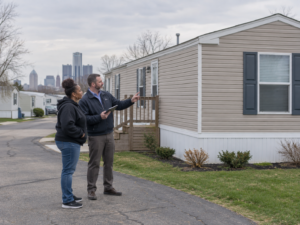
Does Selling Without the Land Lower the Value?
It can lower the total transaction value compared with a property where the seller owns both the home and the land, but the home can still have meaningful market value.
The better question is what buyers in your specific market will pay under the current site arrangement. A maintained home that can stay in place may be more attractive than one that requires relocation. High lot rent, restrictive community rules, deferred repairs, title issues, or a required move can put downward pressure on offers.
That’s why a general online home-value estimate often misses the mark for mobile homes on leased land. The details of the home and site agreement matter too much for a broad Detroit housing number to tell you what the home itself is worth.
Selling a Mobile Home in Detroit Without Owning the Lot
If you decide to sell, gather the title, basic home details, community information, and any paperwork related to liens before talking with buyers. That gives you a clearer picture of what’s being sold and what the next owner will need to handle.
Mobile Home Team purchases mobile homes directly, including homes in Michigan. You can contact our team if you want to discuss your home and receive an offer.
A direct offer gives you a real number to compare with your own research. From there, you can decide whether a direct sale or another selling route fits your timing and situation better.
The Bottom Line on Mobile Home Value in Detroit
If you don’t own the land, your mobile home’s value comes from the home, its condition, its title, its location within the community, and the practical terms a buyer would take on by keeping it on the current lot.
Don’t use standard Detroit house prices as your main benchmark. Start with similar mobile homes, verify the lot and community terms, make sure the title is in order, and account for whether the home can remain where it is.
That will give you a much more realistic view of what your Detroit mobile home may be worth before you decide how to sell it.