Is It Worth Repairing a Mobile Home Before Selling?
Is It Worth Repairing a Mobile Home Before Selling?
It may be worth repairing a mobile home before selling if the work stops active damage, fixes a safety concern, or removes an obvious buyer objection. It usually isn’t worth paying for a full remodel or expensive cosmetic upgrades before you know what the home could sell for in its current condition.
Before hiring contractors, request an as-is offer and compare it with the total cost of repairs. That gives you a real number to work with instead of guessing whether new flooring, a roof replacement, or a kitchen update will pay off.
When Mobile Home Repairs Are Worth It
You don’t need to fix every problem before selling a mobile home. The decision depends on the home’s condition, your budget, your timeline, and the kind of buyer you want to attract.
Repairs may be worth considering when:
- The problem is actively damaging the home
- The repair is affordable and easy to complete
- The issue creates a safety concern
- A small fix would make the home easier to show
- You plan to sell to a traditional retail buyer
- The expected increase in value is greater than the full repair cost
Selling without repairs may make more sense when:
- The home needs several major projects
- You need to sell quickly
- You don’t have cash available for repairs
- Contractors may uncover more damage
- Lot rent and utilities are adding up
- You inherited the home or live far away
- You would rather accept a lower price than manage renovations
A newer home with one or two manageable issues may benefit from repairs. An older mobile home with roofing, plumbing, flooring, and structural concerns can become an expensive project quickly.
Mobile Home Repairs to Consider Before Selling
The most useful repairs are usually the ones that protect the home or prevent buyers from assuming the damage is worse than it is.
Active Roof or Plumbing Leaks
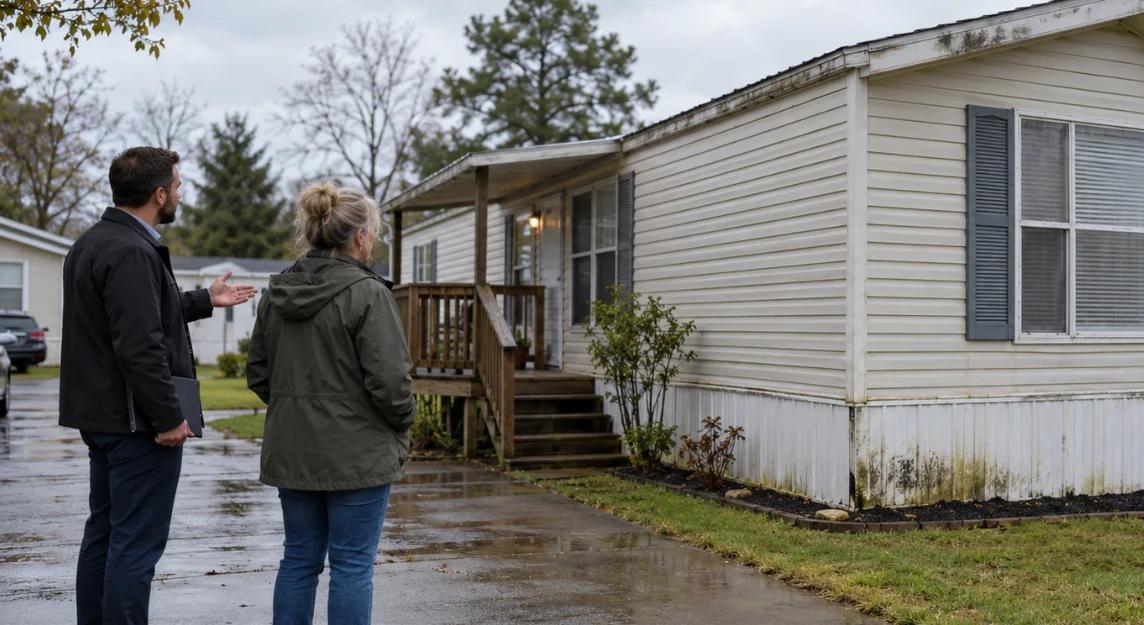
An active leak can spread into insulation, walls, ceilings, subflooring, and framing. If the source of the leak can be repaired at a reasonable cost, taking care of it may prevent the home from losing more value while you prepare to sell.
A small roof patch or plumbing repair is different from replacing the entire roof or rebuilding damaged floors. Get written estimates before committing to a large project.

Electrical and Safety Concerns
Exposed wiring, damaged outlets, unstable steps, broken handrails, and doors that won’t lock should be evaluated before cosmetic improvements.
Safety repairs usually matter more than paint colors or new countertops. Electrical and structural work should be completed by a qualified professional, and some repairs may require local approval or permits.
Broken Windows, Doors, and Exterior Skirting
Visible damage can shape a buyer’s opinion before they see the rest of the home.
A broken window, loose skirting panel, damaged front step, or door that won’t close may be relatively inexpensive to fix. These repairs can make the home feel better maintained without requiring a major renovation.
Cleaning and Removing Belongings
Cleaning and removing clutter can also make a big difference when preparing a mobile home for an as-is sale. Remove trash, unwanted furniture, and personal belongings. Clean the floors and counters. Make sure buyers can safely walk through the home and access important areas.
A clean home may still need repairs, but buyers can see the home clearly instead of focusing on clutter.
Repairs and Upgrades You May Want to Skip
Some projects sound like good investments but cost more than they add to the sale.
Full Kitchen or Bathroom Remodels
Cabinets, countertops, appliances, fixtures, flooring, and labor can quickly turn into a large expense.
A retail buyer may not share your style, and an investor or cash buyer may plan to renovate the home after purchasing it. Unless the rest of the home is in strong condition, a complete remodel may not produce enough additional value.
Premium Flooring
Repair soft, damaged, or unsafe flooring. Be more cautious about replacing dated flooring throughout the entire home.
New flooring may improve the appearance, but it rarely makes sense when the home still has roofing, plumbing, electrical, or structural problems.
Trendy Cosmetic Updates
Decorative lighting, bold paint choices, wall treatments, and upscale fixtures are personal decisions. They may make the home look newer, but buyers are usually more concerned about the condition of the roof, subfloor, utilities, and exterior.
Fresh neutral paint may be reasonable if the walls are heavily marked or damaged. Repainting every room while leaving an active leak unresolved is usually the wrong priority.
Major Structural Changes
Before changing walls, additions, decks, or other structural features, review HUD’s manufactured home repair and alteration guidance and check with the appropriate state or local agency.
Mobile homes may be subject to state, county, city, or park rules. Structural work may require permits, inspections, or approval from the community.
How to Compare Repairing and Selling As-Is
The repair estimate is only one part of the cost.
You should also consider:
- Lot rent while the work is completed
- Utility and insurance expenses
- Contractor delays
- Cleanup and disposal fees
- Permit or inspection costs
- The chance that more damage will be found
- The time required to list and show the home
For example, spending $8,000 on repairs does not make sense if the work is only expected to increase the sale price by $5,000. You would lose money before counting the cost of holding the home during the project.
A better approach is to collect both numbers:
- Get written estimates for the repairs you are considering.
- Request an offer for the home in its current condition.
- Compare the possible sale proceeds, costs, and timelines.
- Choose the option that leaves you with the best realistic outcome.
This is especially useful when the home needs more than one major repair. Projects often overlap. A plumbing leak may lead to damaged flooring, while a roof leak may reveal ceiling or wall damage.
Selling to a Traditional Buyer Versus an As-Is Buyer
The type of buyer you choose affects how much work you may need to complete.
A traditional buyer may expect the home to be clean, functional, and ready to move into. If financing is involved, the buyer’s lender may also have requirements related to the home’s age, condition, title, foundation, or location.
An as-is buyer is usually more comfortable purchasing a mobile home that needs repairs. The offer will reflect the current condition, but you may be able to avoid contractor costs, repeated showings, financing delays, and a long repair process.
Mobile Home Team purchases mobile homes in as-is condition. Sellers can request an offer without remodeling the home first, then compare that option with the cost of completing repairs themselves. You may be surprised by how much time, money, and stress you can avoid by selling without remodeling first.